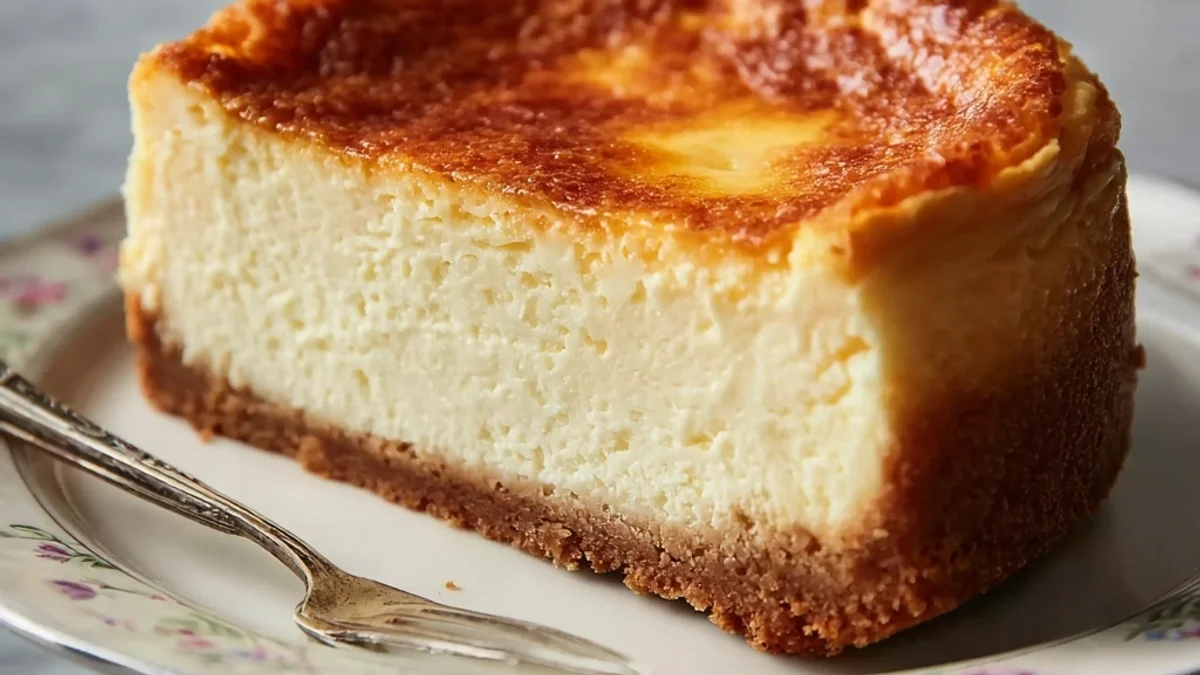


Honestly, my love affair with New York cheesecake started years ago, in a tiny little diner in the Village. I remember the first bite so vividly: that creamy, dense texture, the slight tang, the buttery crust… it was pure magic. I thought, "Could I ever make something that good?" Many, many attempts followed, some a bit disastrous, involving cracks and soupy centers, but each one brought me closer to this recipe. This isn't just a dessert, it's a memory, a comfort, a little slice of that bustling city right in my quiet kitchen.
I still laugh thinking about my third attempt at this Classic New York Cheesecake. I got so excited, I pulled it out of the oven too soon, convinced it was done. The center, bless its heart, decided to do a little wobble dance, and then… a crater! My husband just looked at me, bewildered, as I declared it "rustic." Lesson learned, and trust me, you'll benefit from my impatience!
Ingredients
- Graham Cracker Crumbs: The foundation, right? Don't skimp on quality here, a good crumb makes all the difference. I usually go for the honey-flavored ones for an extra layer of yum.
- Granulated Sugar: We need just enough to sweeten the crust and give that creamy filling its signature taste. Don't go wild, we want the cheese to shine, not just sugar.
- Unsalted Butter, melted: This binds the crust together. Honestly, I've tried using less, thinking I was being "healthy," and the crust just crumbled. Stick to the amount, it works.
- Cream Cheese (full-fat, block): THE star of our Classic New York Cheesecake. You must use full-fat blocks, not the spreadable kind in a tub. I made that mistake once, and it was a disaster! Room temperature is key, too, for that smooth, lump-free batter.
- Sour Cream: This is my secret weapon for that signature tang and velvety texture. It balances the richness of the cream cheese so well. I tried Greek yogurt once, and it was okay, but sour cream just hits different.
- Large Eggs: These are our binders, giving the cheesecake its structure. Make sure they're at room temperature, just like the cream cheese, to avoid any curdling when mixing.
- Vanilla Extract: Pure vanilla, please! It adds warmth and depth. I always add a tiny bit more than the recipe calls for because I just love that aroma.
- Lemon Zest: A little bit of fresh lemon zest brightens everything up. You won't taste "lemon" per se, but it cuts through the richness beautifully.
Instructions for Classic New York Cheesecake
- Prep the Pan & Crust:
- Okay, first things first, preheat your oven to 350°F (175°C). Then, grab a 9-inch springform pan. You'll want to wrap the outside bottom and sides really well with heavy-duty foil I usually do two layers because we're doing a water bath, and leaks are the enemy! In a medium bowl, mix your graham cracker crumbs, 2 tablespoons of sugar, and melted butter. Press this mixture firmly into the bottom of your prepared pan. I use the bottom of a glass to get it super packed. Pop it in the oven for about 10 minutes to set, then let it cool while you make the filling.
- Whip Up the Creamy Filling:
- Reduce your oven temp to 325°F (160°C). In a large mixing bowl, using an electric mixer, beat the softened cream cheese on medium speed until it's super smooth and lump-free. This is crucial for a silky Classic New York Cheesecake! Scrape down the sides of the bowl often. Gradually add the remaining sugar, beating until just combined. Don't overmix here, or you'll incorporate too much air, which can lead to cracks. Trust me, I’ve learned that the hard way.
- Add the Wet Ingredients:
- Next up, beat in the sour cream, vanilla extract, and lemon zest until everything is just incorporated. Again, slow and steady wins the race, we're still trying to avoid too much air. Then, add the eggs one at a time, beating on low speed just until each egg is combined before adding the next. Overmixing the eggs is a big no-no, it can make your cheesecake puff up and then crack as it cools. I always forget to scrape the bowl down one last time before the eggs, oops!
- The Water Bath Technique:
- Pour your beautiful, creamy filling over the cooled crust in the springform pan. Now, here's the magic trick for a crack-free Classic New York Cheesecake: the water bath! Place your foil-wrapped springform pan into a larger roasting pan. Carefully pour hot water into the roasting pan until it comes about halfway up the sides of the springform pan. This creates a humid environment in the oven, ensuring even cooking and preventing those dreaded cracks. I spilled water once getting it into the oven, so be gentle!
- Bake to Perfection:
- Carefully transfer the roasting pan with the cheesecake and water bath to your preheated oven. Bake for 60-75 minutes, or until the edges are set but the center still jiggles slightly when you gently shake the pan. Don't open the oven door too often! I know it's tempting, but temperature fluctuations are not a cheesecake's friend. My kitchen always smells incredible at this point, it’s just the best!
- Cooling & Chilling is Key:
- Once baked, turn off the oven but leave the cheesecake inside with the door slightly ajar for one hour. This gradual cooling prevents cracking. After an hour, remove the cheesecake from the water bath and the roasting pan, unwrap the foil, and let it cool completely on a wire rack at room temperature. Finally, cover it loosely with plastic wrap and chill in the refrigerator for at least 6 hours, or even better, overnight. This is the hardest part, honestly, the waiting!
There was one time I was so proud of a Classic New York Cheesecake, I barely let it cool before slicing. Big mistake! It was still a little too soft, and the slices weren't as clean as I wanted. But hey, it still tasted heavenly, even if it looked a bit… rustic. Sometimes, you just can't wait for that first bite!
Storing Your Classic New York Cheesecake
Okay, so once this beautiful Classic New York Cheesecake is chilled, you'll want to store it properly to keep it fresh and delicious. I usually keep mine in the springform pan, covered loosely with plastic wrap or foil, in the fridge. Slices can be transferred to an airtight container. It'll stay good for about 5-7 days, though honestly, it rarely lasts that long in my house! I've tried freezing individual slices, wrapped tightly in plastic wrap and then foil, and they hold up surprisingly well for up to a month. Just thaw them in the fridge overnight. One time, I left a slice uncovered in the fridge, and it absorbed all the onion smell from dinner don't do that lol. Keep it covered!

Classic New York Cheesecake Ingredient Swaps
You know, sometimes you just don't have exactly what the recipe calls for, and that's okay! For the crust, if you're out of graham crackers, digestive biscuits or even shortbread cookies can work the flavor will be a bit different, but still good. I once used gingersnaps for a holiday version, and it was quite a hit! If sour cream is a no-go, full-fat Greek yogurt can substitute, but be aware the tang might be a bit more pronounced. As for the vanilla, if you only have imitation, it'll work, but the pure stuff truly elevates the flavor of this Classic New York Cheesecake. I tried a little almond extract once for a different vibe, and it was interesting, but I always come back to pure vanilla.
Serving Up Classic New York Cheesecake
This Classic New York Cheesecake is a star all on its own, but a few simple additions can make it extra special. My absolute favorite way to serve it is chilled, with a simple topping of fresh berries raspberries, strawberries, or blueberries are just perfect. The tartness of the fruit beautifully cuts through the richness of the cheesecake. A light drizzle of raspberry coulis or a homemade strawberry sauce is also divine. For a truly decadent experience, a dollop of fresh whipped cream or a dusting of cocoa powder works wonders. This dish and a strong cup of coffee after a lovely dinner? Yes please! It’s also surprisingly good with a sparkling wine, for those fancy moments.
The Heart of Classic New York Cheesecake
The Classic New York Cheesecake, as we know it, really rose to prominence in the early 20th century, becoming an icon of New York City's vibrant culinary scene. While cheesecakes have ancient origins, the "New York" style is distinct for its dense, rich, and creamy texture, typically made with cream cheese. I remember visiting New York for the first time as a kid, and seeing those towering slices in deli windows. It felt so sophisticated! It’s a dessert that speaks of tradition, of bustling diners, and of simple, satisfying pleasures. It’s comforting to know that when I bake this, I’m connecting with a little piece of that history, right here in my own kitchen.
And there you have it! A Classic New York Cheesecake that’s dense, creamy, and utterly delicious. Every time I pull one out of the fridge, perfectly chilled, I get a little flutter of excitement. It feels like a small victory, a testament to patience and a few learned lessons. I hope you give this a try and make it your own. Let me know how your cheesecake adventure goes!

Frequently Asked Questions
- → Why does my Classic New York Cheesecake crack?
Oh, the dreaded crack! Usually, it's from overmixing (incorporating too much air), opening the oven door too often, or cooling it too quickly. The water bath and slow cooling in the oven are your best friends here, honestly. I've had many cracked cheesecakes, and they still taste amazing!
- → Can I use low-fat cream cheese for this recipe?
To be real, I don't recommend it for a Classic New York Cheesecake. Low-fat cream cheese has more water, and your cheesecake won't set up as creamy and dense. You'll end up with a much softer, almost jiggly texture, which isn't the New York style we're aiming for. Stick with the full-fat blocks!
- → How do I know when my cheesecake is done baking?
You're looking for set edges, but the very center (about 2-3 inches) should still have a slight wobble when you gently shake the pan. It will firm up beautifully as it cools and chills. Don't wait until the center is completely firm, or it'll be overbaked and potentially dry.
- → Can I make this Classic New York Cheesecake ahead of time?
Absolutely! This cheesecake is actually better the next day, after a full night of chilling. The flavors meld, and the texture becomes perfectly dense. It's a fantastic make-ahead dessert for parties or just to have on hand for a week of delicious treats. I always make mine the day before.
- → What if I don't have a springform pan for my Classic New York Cheesecake?
While a springform pan is ideal for easy removal, you could try baking it in a regular 9-inch round cake pan lined with parchment paper, leaving an overhang to lift it out. It won't be as pretty, but it'll still taste great. I've even done individual cheesecakes in muffin tins in a pinch!