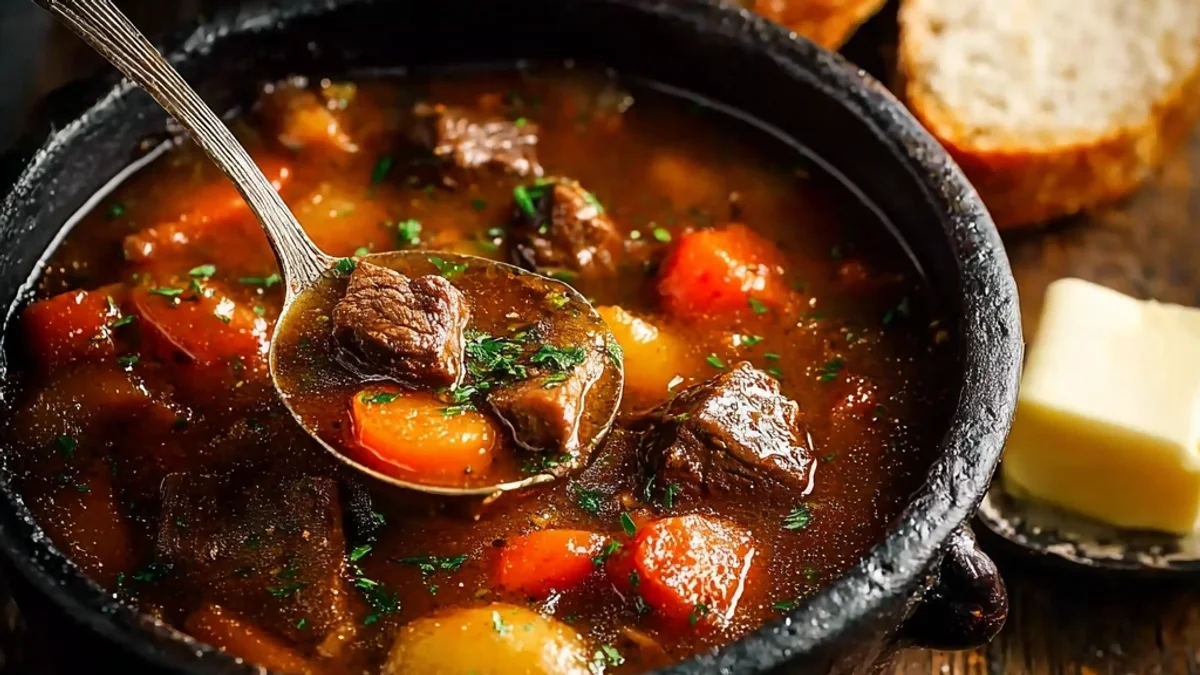


You know those recipes that just… feel like home? For me, this Rustic Old Fashioned Beef Stew is absolutely it. I remember being a kid, bundled up on a blustery Saturday, and the smell of this stew simmering for hours would just fill our tiny kitchen. Honestly, the anticipation was almost as good as the meal itself! My grandma, bless her heart, had this knack for turning simple ingredients into pure magic. I’d hover around, trying to peek into the pot, and she’d always shoo me away with a smile and a wooden spoon. It wasn't always perfect, I recall one time she accidentally added too much thyme and we all had a good laugh, but it was always made with so much love. This stew isn't just food, it's a warm hug, a reminder of simpler times, and a dish that truly nourishes the soul.
One time, I was so excited to get this Rustic Old Fashioned Beef Stew going that I completely forgot to dredge the beef in flour before searing. The beef didn't brown nearly as well, and the sauce just wasn’t as thick and rich later on. I mean, it still tasted good, because, well, it's stew! But it was a definite "oops" moment that taught me to slow down and follow my own steps. Now, I always make sure that flour step happens. It’s those little details that really make a difference, even when you're rushing after a long day.
Rustic Old Fashioned Beef Stew Ingredients
- Beef Chuck (stew meat): This is the star of our Rustic Old Fashioned Beef Stew! You want good, marbled chuck cut into 1.5-inch pieces. It’s tough at first, but slow cooking turns it incredibly tender and flavorful. Don't cheap out here, it makes all the difference.
- Olive Oil: Just a drizzle to get things sizzling. I prefer a good extra virgin olive oil for that subtle fruity note, but honestly, whatever you have on hand works.
- Yellow Onions: The foundation of flavor. They sweeten up as they cook down, adding so much depth. I always chop more than the recipe calls for because, why not?
- Garlic: You can never have too much garlic, in my opinion! Freshly minced is key here, it brings a pungent warmth that dried garlic just can't quite replicate.
- Carrots: Sweet and earthy, they add a lovely color and natural sweetness. I tried baby carrots once, and they just didn't hold up as well as chunkier cuts.
- Celery: Part of the classic mirepoix, it adds a subtle savory note that rounds out the veggie base.
- Potatoes (Yukon Gold or Red): I love how Yukon Golds get creamy inside but hold their shape. Russets can get a bit too mushy for my taste in stew.
- Beef Broth: The liquid gold! Use a good quality, low-sodium beef broth so you can control the seasoning. I’ve made the mistake of using watery broth, and the stew suffered.
- Dry Red Wine (e.g., Cabernet Sauvignon, Merlot): This adds incredible depth and acidity, really enhancing the beefy flavors. Don't worry, the alcohol cooks off!
- Tomato Paste: A little tube of concentrated umami. It adds richness and a touch of sweetness.
- Worcestershire Sauce: My secret weapon for a savory punch! It brings a tangy, umami depth that makes people wonder what your secret ingredient is.
- Bay Leaves: Essential for that classic stew aroma. They add a subtle, herbaceous note. Just remember to fish them out before serving!
- Dried Thyme: Earthy and aromatic, it pairs perfectly with beef. I always have a jar of this on hand.
- Salt & Black Pepper: Season generously, but taste as you go! Freshly cracked pepper is always better.
- All-Purpose Flour: For dredging the beef, it helps create a beautiful crust and thickens the sauce.
- Fresh Parsley (for garnish): A sprinkle of fresh green at the end really brightens everything up and adds a pop of freshness.
Cooking Rustic Old Fashioned Beef Stew
- Prep Your Veggies and Beef:
- First things first, get all your chopping out of the way. Dice your onions, mince that garlic, and chop your carrots, celery, and potatoes into nice, bite-sized chunks. For the beef chuck, trim any excess fat and cut it into roughly 1.5-inch pieces. Pat it super dry with paper towels this is crucial for a good sear! Then, toss the beef with a generous sprinkle of salt, pepper, and the flour until each piece is lightly coated. Honestly, this step makes all the difference in building flavor and thickening the stew later.
- Sear the Beef:
- Heat a good glug of olive oil in a large Dutch oven or heavy-bottomed pot over medium-high heat until it shimmers. This is where the magic starts for our Rustic Old Fashioned Beef Stew! Add the floured beef in batches, making sure not to overcrowd the pot. You want a deep, golden-brown crust on all sides. This searing creates incredible flavor, and it’s a step I used to rush, only to realize later how much I missed out on. Don't worry about cooking it through, we're just building that beautiful crust. Transfer the seared beef to a plate and set aside.
- Build the Flavor Base:
- Reduce the heat to medium. Add a little more olive oil if needed, then toss in your diced onions, carrots, and celery. Sauté them until they start to soften and become fragrant, about 5-7 minutes. I love this part, the smell of the veggies cooking down is just incredible! Next, add the minced garlic and tomato paste, stirring constantly for another minute until the tomato paste darkens slightly. This little caramelization step for the paste adds so much richness to the Rustic Old Fashioned Beef Stew.
- Deglaze and Simmer:
- Pour in the dry red wine and scrape up all those delicious browned bits from the bottom of the pot with a wooden spoon. Let it simmer for a couple of minutes until the wine reduces by about half. Then, add the beef broth, Worcestershire sauce, bay leaves, and dried thyme. Bring the mixture to a gentle boil, then return the seared beef and any accumulated juices from the plate back to the pot. Stir everything together, making sure the beef is mostly submerged. This is where the Rustic Old Fashioned Beef Stew truly begins to come alive.
- Slow Cook to Perfection:
- Reduce the heat to low, cover the pot tightly, and let your Rustic Old Fashioned Beef Stew simmer gently for about 1.5 to 2 hours. The goal here is for the beef to become fork-tender. Check it occasionally, giving it a stir. Around the 1.5-hour mark, or when the beef is almost tender, add your chopped potatoes. Continue to simmer, covered, for another 30-45 minutes, or until the potatoes are tender and the sauce has thickened to your liking. I remember one time I added the potatoes too early, and they just disintegrated! Learn from my mistake!
- Finish and Serve:
- Once the beef and potatoes are perfectly tender, taste the Rustic Old Fashioned Beef Stew and adjust the seasoning with more salt and pepper if needed. Remember to remove the bay leaves before serving, nobody wants a surprise crunch! Ladle generous portions into bowls and garnish with fresh chopped parsley. The vibrant green against the rich, dark stew just looks so inviting. Serve it piping hot with some crusty bread for dipping. This final result should be a beautiful, comforting bowl of pure goodness that smells absolutely divine.
Making this Rustic Old Fashioned Beef Stew always fills my kitchen with such incredible smells, it's like a culinary hug. There was one Saturday, the kids were running wild, I had flour on my nose, and a splash of red wine ended up on my favorite apron, but as the stew simmered, all that chaos just melted away. It’s a messy process sometimes, but the end result is always worth it. That first spoonful, with the tender beef and rich sauce, just transports you.
Rustic Old Fashioned Beef Stew Storage Tips
This Rustic Old Fashioned Beef Stew is one of those dishes that honestly tastes even better the next day, once all those flavors have had more time to meld and deepen. Let it cool completely before transferring it to an airtight container. I've made the mistake of putting warm stew directly into the fridge, and it creates condensation, which can make things watery, so don't do that lol. It’ll keep beautifully in the refrigerator for up to 3-4 days. For longer storage, this stew freezes like a dream! Portion it into freezer-safe containers or heavy-duty freezer bags (laying them flat saves space). It’ll stay good in the freezer for up to 3 months. When you're ready to enjoy it again, thaw it in the fridge overnight and gently reheat it on the stovetop over low heat, adding a splash of extra broth or water if it seems too thick. Trust me, it reheats wonderfully!

Rustic Old Fashioned Beef Stew Substitutions
I’ve definitely played around with this Rustic Old Fashioned Beef Stew recipe over the years, sometimes out of necessity, sometimes just for fun. If you're not a fan of red wine or don't have any on hand, you can swap it for an equal amount of beef broth with a tablespoon of balsamic vinegar for that touch of acidity it worked, kinda, but the depth from the wine is hard to beat. For the potatoes, sweet potatoes are a surprisingly delicious twist, they add a lovely sweetness, though the texture is different. If you don't have beef chuck, a tougher cut like round steak can work, but you might need to cook it a bit longer to get that melt-in-your-mouth tenderness. Tried using chicken broth once in a pinch, and while it was okay, it just didn't have the same robust flavor that beef broth brings to a Rustic Old Fashioned Beef Stew.
Serving Rustic Old Fashioned Beef Stew
Serving this Rustic Old Fashioned Beef Stew is all about creating that ultimate comforting experience. My absolute favorite way to enjoy it is with a big chunk of crusty sourdough bread, perfect for soaking up every last bit of that rich, savory sauce. Honestly, this dish and a good rom-com on a rainy night? Yes please! You could also serve it over creamy mashed potatoes or even egg noodles if you want something a bit heartier. For a touch of green, a simple side salad with a light vinaigrette cuts through the richness beautifully. And for drinks, a hearty red wine (the same kind you used in the stew!) complements the flavors wonderfully, or a dark, malty beer. For dessert, something light like an apple crisp or a simple vanilla bean ice cream would be the perfect sweet ending to this Rustic Old Fashioned Beef Stew feast.
Cultural Backstory of Rustic Old Fashioned Beef Stew
Beef stew, in its many forms, has such a rich and varied history across cultures, and this Rustic Old Fashioned Beef Stew is a nod to those comforting traditions. Stews are often born out of necessity, using tougher cuts of meat and seasonal vegetables, slow-cooked to tender perfection. They’re a testament to making the most of what you have, transforming humble ingredients into something deeply satisfying. My own connection to this dish comes from my grandma’s kitchen, where it wasn’t just a meal, but a symbol of family, warmth, and resilience. While the exact origins of this specific recipe are rooted in countless home cooks perfecting their own versions over generations, it embodies the spirit of hearty, nourishing meals that bring people together, especially during colder months. It’s a dish that crosses boundaries, bringing comfort wherever it’s served.
And there you have it, my Rustic Old Fashioned Beef Stew. It's more than just a recipe, it's a piece of my heart, a connection to memories, and a dish I truly hope brings as much comfort to your table as it does to mine. Seeing it bubble on the stove, smelling that rich aroma, it just feels right. I hope you give it a try, tweak it to make it your own, and maybe even share some of your own kitchen chaos stories with me. Happy cooking, friends!

Frequently Asked Questions about Rustic Old Fashioned Beef Stew
- → Can I make this Rustic Old Fashioned Beef Stew in a slow cooker?
Absolutely! After searing the beef and sautéing the aromatics on the stovetop, transfer everything to your slow cooker. Cook on low for 6-8 hours or high for 3-4 hours. I've done this many times when I know I'll be out all day, and it turns out great!
- → What if I don't have dry red wine for my Rustic Old Fashioned Beef Stew?
No worries! You can substitute the red wine with an equal amount of extra beef broth, along with a tablespoon of red wine vinegar or balsamic vinegar to add a similar acidic depth. It won't be quite the same, but it still works well.
- → How do I prevent my vegetables from getting mushy in the stew?
The trick I learned the hard way is to add the more delicate vegetables, like potatoes, later in the cooking process. For this Rustic Old Fashioned Beef Stew, I add the potatoes about 45 minutes to an hour before it's done, so they cook through but retain their shape and texture.
- → Can I prepare the Rustic Old Fashioned Beef Stew ahead of time?
Oh, yes, and I highly recommend it! As I mentioned, this stew is even better the next day. Cook it completely, let it cool, and then refrigerate. Reheat gently on the stovetop or in the oven. The flavors really deepen overnight, making it a fantastic make-ahead meal.
- → What other vegetables could I add to this Rustic Old Fashioned Beef Stew?
I love experimenting! You could add parsnips for a touch of sweetness, some chopped mushrooms for extra earthiness, or even some frozen peas or green beans during the last 15 minutes of cooking for a pop of color and freshness. Just use what you have and love!