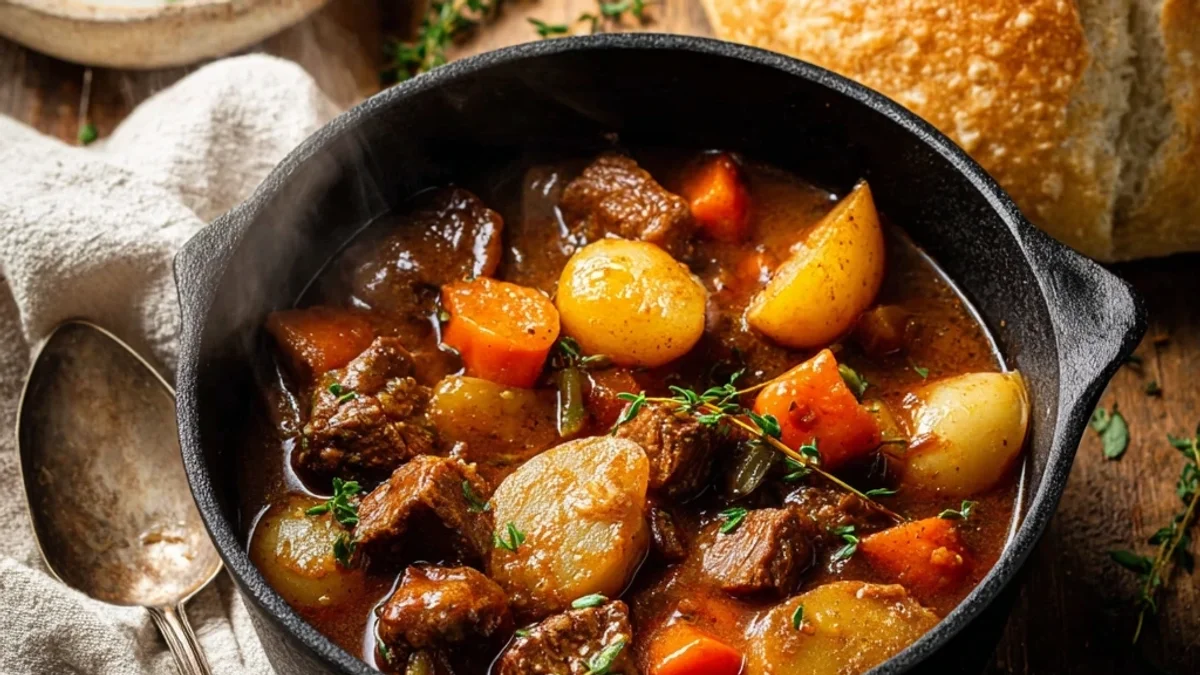


Remember those chilly Sunday afternoons at grandma’s house? The kitchen was always filled with a scent that just hugged you, and more often than not, it was her Old Fashioned Beef Stew simmering away. Honestly, I didn't expect that a simple stew could hold so many memories, but it does. This isn't just a recipe, it’s a time machine back to simpler days, to warmth, to family. It's the kind of dish that makes you forget your worries, even if just for a little while.
My first attempt at this Old Fashioned Beef Stew was, well, a disaster. I rushed the browning, forgot to deglaze the pan, and ended up with something more like watery beef soup. Oops! I remember laughing so hard, but also feeling a little defeated. It just goes to show, even the most seasoned home cooks have their kitchen chaos moments. But I kept trying, and each time, it got a little better, a little more like grandma's.
Ingredients
Base Ingredients
- Beef Chuck Roast: This is your star! Honestly, a good chuck roast, cut into generous 1.5-inch cubes, is key for that fall-apart tender Old Fashioned Beef Stew. Don't go for anything too lean, you need that fat for flavor and moisture.
- Beef Broth: Use a good quality, low-sodium beef broth. It’s the liquid backbone of this stew, giving it depth. I tried water once, and it just wasn't the same kinda bland, to be real.
- All-Purpose Flour: Just a little dusting helps create that beautiful crust on the beef and thickens the stew slightly. It’s a small step that makes a big difference in texture.
- Tomato Paste: This little tube of magic adds a concentrated savory punch and a touch of acidity that balances the richness. Don't skip it, it truly elevates the flavor.
Aromatic & Flavor Boosters
- Onion & Garlic: The classic aromatic duo! They build the foundational flavor for your Old Fashioned Beef Stew. I'm one of those people who believes you can never have too much garlic, so I usually add an extra clove or two.
- Worcestershire Sauce: A secret weapon for umami! Just a splash adds a complex, savory depth that you can't quite pinpoint but know is there.
- Dried Thyme & Bay Leaves: These herbs bring that classic, earthy stew flavor. Fresh thyme is great too, but dried works beautifully here and is what I usually have on hand.
Vegetable Powerhouse
- Carrots: Sweet and vibrant, carrots add a lovely color and natural sweetness. I like to cut them into chunky pieces so they don't get lost in the stew.
- Celery: Adds a subtle, fresh, aromatic note that complements the other veggies.
- Potatoes (Yukon Gold or Red Bliss): These get incredibly tender and soak up all that rich gravy. I prefer Yukon Golds for their creamy texture, but honestly, any waxy potato works.
Finishing Touches
- Fresh Parsley: A bright, fresh garnish at the end. It adds a pop of color and a little herby freshness that cuts through the richness.
Instructions
- Searing the Beef for Your Old Fashioned Beef Stew:
- First things first, pat those beef cubes super dry with paper towels. This is where I always forget to salt the meat beforehand, but don't you do it! Season generously with salt and pepper. Heat a good glug of olive oil in a large Dutch oven or heavy-bottomed pot over medium-high heat. You want it hot! Sear the beef in batches until deeply browned on all sides. This isn't just for color, it builds incredible flavor, called the Maillard reaction, and it’s critical for a truly rich Old Fashioned Beef Stew. Don't overcrowd the pan, or you'll steam the meat instead of searing it. Remove the browned beef and set aside, leaving all those lovely browned bits in the pot.
- Building Flavor for the Old Fashioned Beef Stew:
- Reduce the heat to medium. Add a little more oil if needed, then toss in your chopped onions. Sauté them until they're soft and translucent, about 5-7 minutes. Then, add the minced garlic and tomato paste. Cook for another minute or two, stirring constantly, until the tomato paste darkens slightly and smells fragrant. This step deepens the flavor profile so much! Pour in a splash of beef broth and scrape up all those browned bits from the bottom of the pot with a wooden spoon that's pure gold, hon! This is called deglazing, and it's essential for a flavorful Old Fashioned Beef Stew.
- Simmering Your Old Fashioned Beef Stew to Perfection:
- Return the seared beef to the pot. Pour in the rest of the beef broth and the Worcestershire sauce. Add the dried thyme and bay leaves. Give everything a good stir. Bring the mixture to a gentle simmer, then reduce the heat to low, cover the pot, and let it cook. This is where the magic happens! I usually let it go for about 1.5 to 2 hours, or until the beef is starting to get tender but not quite falling apart yet. The aroma that fills your kitchen during this time? Oh my goodness, it’s just the best!
- Adding Veggies to the Old Fashioned Beef Stew:
- After the beef has had its initial simmer, it’s time for the vegetables. Add your chopped carrots, celery, and potatoes to the pot. Give it another gentle stir to make sure everything is submerged in that delicious liquid. If it looks a little dry, you can add a touch more broth. Cover the pot again and continue to simmer for another 30-45 minutes, or until the vegetables are fork-tender and the beef is melt-in-your-mouth soft. This is where I sometimes forget to stir and the potatoes stick a tiny bit, so keep an eye on it!
- Thickening the Old Fashioned Beef Stew:
- Once the beef and vegetables are tender, check the consistency of your stew. If it's not as thick as you like, you can make a quick slurry. In a small bowl, whisk together 1 tablespoon of flour with 2 tablespoons of cold water until smooth. Stir this slurry into the simmering stew, a little at a time, until it reaches your desired thickness. Let it simmer for another 5-10 minutes to cook out the raw flour taste. I've definitely added too much at once and ended up with a lumpy mess before, so go slow!
- Final Touches for the Old Fashioned Beef Stew:
- Before serving, remove the bay leaves nobody wants to bite into one of those! Taste and adjust the seasonings. You might need a little more salt or pepper. Ladle your rich, aromatic Old Fashioned Beef Stew into bowls. Garnish generously with fresh chopped parsley. The vibrant green really makes the stew pop, and it adds a lovely fresh note. Serve it piping hot and watch everyone dig in! It should look, smell, and taste like pure, unadulterated comfort.
There's something so satisfying about seeing a big pot of Old Fashioned Beef Stew bubbling on the stove, especially when the weather turns cold. It’s messy, yes, with flour dust and vegetable scraps everywhere, but that’s just part of the charm, isn't it? It's a labor of love that pays off in spades, filling your home with warmth and your belly with pure happiness. My kitchen might be a disaster zone, but the results are always worth it.
Storage Tips
This Old Fashioned Beef Stew is one of those dishes that actually gets better with age! I mean, honestly, leftovers are my favorite part. Once completely cooled, transfer the stew to airtight containers. It’ll happily hang out in the fridge for 3-4 days. I microwaved it once in a hurry and the sauce separated a little so don't do that lol. Gently reheat it on the stovetop over low heat, stirring occasionally, to keep that beautiful consistency. It also freezes beautifully! Portion it into freezer-safe containers or bags, leaving a little headspace, and it’ll be good for up to 3 months. Just thaw in the fridge overnight and reheat. It’s a total meal-prep win when you need a quick, comforting dinner.

Ingredient Substitutions
I’ve definitely played around with this Old Fashioned Beef Stew recipe over the years, sometimes out of necessity, sometimes just for fun. Ran out of beef broth once, and used red wine mixed with a bit more water it added a fantastic depth, though a little less traditional, but definitely worked! If you don't have chuck roast, short ribs can be used, though they'll take a bit longer to get super tender. For veggies, feel free to swap out potatoes for sweet potatoes for a touch of sweetness, or add parsnips for an earthy note. I tried adding mushrooms once, and it worked… kinda. They added a nice umami, but I prefer the classic veggie mix for this particular stew. Use what you have, honestly!
Serving Suggestions
Oh, the ways to enjoy this Old Fashioned Beef Stew! For me, it’s gotta be with a crusty baguette, perfect for soaking up every last bit of that rich gravy. A simple green salad with a tangy vinaigrette is also a lovely counterpoint to the heartiness. If you're feeling fancy, a dollop of sour cream or a sprinkle of shredded cheddar on top adds an extra layer of creaminess. For drinks, a robust red wine, like a Cabernet Sauvignon, pairs beautifully, or even a dark ale. This dish and a good old rom-com? Yes please. It’s perfect for a cozy night in, making you feel all warm and fuzzy.
Cultural Backstory
Beef stew, in its many forms, has been a staple in kitchens around the world for centuries, a true testament to its comforting and nourishing qualities. This particular Old Fashioned Beef Stew, with its root vegetables and slow-cooked beef, reminds me so much of the hearty, resourceful cooking traditions of my grandmother's generation. It’s a dish born out of making the most of what you have, transforming humble ingredients into something truly extraordinary through patience and love. It’s not fancy, but it’s real, it’s honest, and it’s deeply satisfying. It represents that feeling of home, of gathering, of warmth on a cold day, a culinary hug passed down through the years.
And there you have it, my take on the classic Old Fashioned Beef Stew. It’s more than just food, it’s a memory, a feeling, a little bit of my heart on a plate. The way the beef just melts, the tender vegetables, that rich, savory gravy it’s everything I want on a chilly evening. I hope it brings as much warmth and comfort to your table as it does to mine. Honestly, it turned out even better than I remembered! Now go on, give it a try, and tell me your kitchen chaos stories!

Frequently Asked Questions
- → Can I make this Old Fashioned Beef Stew in a slow cooker?
You absolutely can! After searing the beef and sautéing the aromatics on the stovetop (don't skip that flavor-building step!), transfer everything to your slow cooker. Cook on low for 6-8 hours or high for 3-4 hours, adding the potatoes and carrots for the last 1-2 hours.
- → What kind of beef works best for this Old Fashioned Beef Stew?
Chuck roast is my top pick because it has enough fat and connective tissue to break down beautifully during slow cooking, making it incredibly tender. I've tried leaner cuts, and they just don't achieve that same melt-in-your-mouth texture.
- → How can I make my Old Fashioned Beef Stew gravy thicker?
If your stew isn't as thick as you like, whisk a tablespoon of flour or cornstarch with an equal amount of cold water to create a slurry. Stir it into the simmering stew a little at a time until it reaches your desired consistency. I always add it slowly to avoid lumps!
- → How long does Old Fashioned Beef Stew last in the fridge?
Once cooled, this stew stores wonderfully in an airtight container in the refrigerator for about 3 to 4 days. Honestly, the flavors deepen and it often tastes even better the next day, so it's perfect for meal prepping!
- → Can I add other vegetables to this Old Fashioned Beef Stew?
Definitely! I've experimented with parsnips, turnips, or even green beans towards the end of cooking. Just be mindful of how long they need to cook. Green beans, for example, only need about 15-20 minutes to stay crisp-tender.