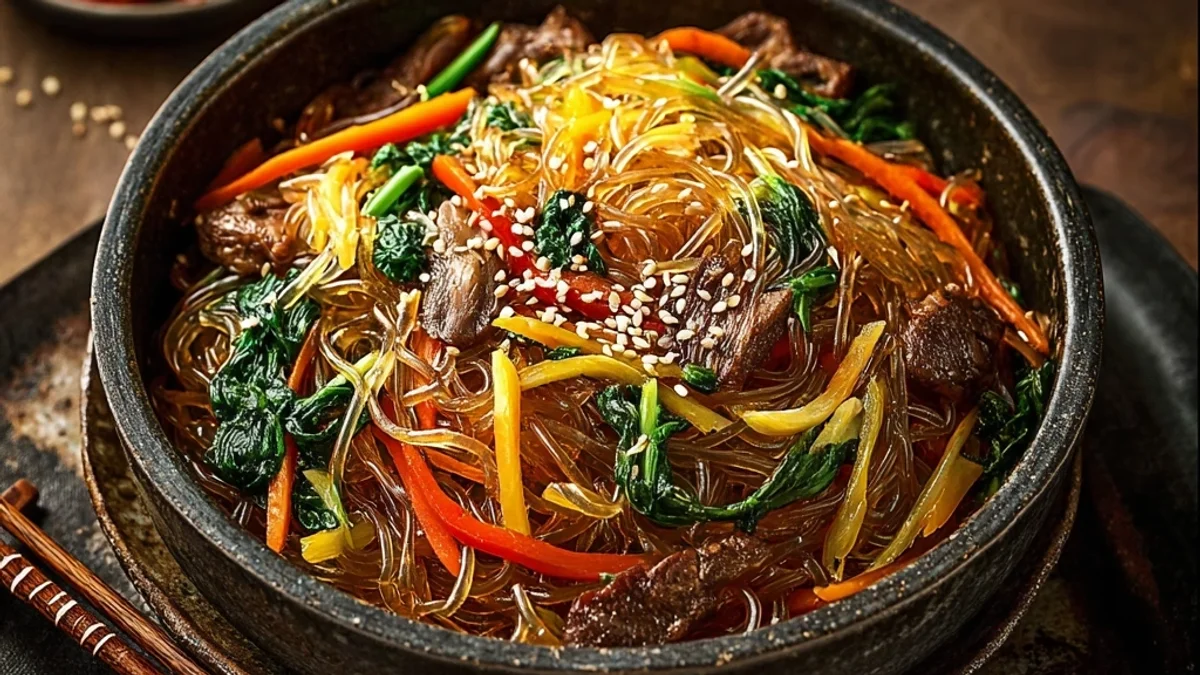


I remember the first time I tried Authentic Korean Japchae Noodle Dish. It was at a tiny, bustling Korean restaurant tucked away in a strip mall, a place my friend swore by. I was a bit overwhelmed by the menu, honestly, but she insisted I try the Japchae. And oh my goodness, it was an instant love affair! The chewy glass noodles, the rainbow of tender-crisp veggies, that savory-sweet sauce... it was a revelation. It felt like a warm hug in a bowl, a comforting taste I just had to recreate in my own kitchen. My first few attempts were, well, a little chaotic, but totally worth it.
My second time making this Authentic Korean Japchae Noodle Dish, I totally overcooked the spinach. It turned into this sad, mushy green pile. I almost gave up, but I salvaged it by just adding a fresh batch, and honestly, the slight texture difference just added to its charm. It reminded me that even kitchen oops moments can lead to delicious discoveries, or at least a good laugh!
Authentic Korean Japchae Noodle Dish Ingredients
- Sweet Potato Starch Noodles (Dangmyeon): These are the heart of Authentic Korean Japchae Noodle Dish! They’re clear, chewy, and soak up all that amazing sauce. Don’t try to substitute with regular pasta, it just won't be the same, I promise.
- Beef Sirloin (or Ribeye): I love the richness a thinly sliced sirloin brings. I tried it once with ground beef, and it worked... kinda, but the texture wasn't quite right. For a vegetarian take, mushrooms are a great swap!
- Fresh Spinach: I always use fresh spinach, the frozen stuff just doesn't get that vibrant color or slight bite. I prefer baby spinach, less chopping, more cooking!
- Carrots: Sliced thin, they add a touch of sweetness and a beautiful orange pop. I once grated them by mistake, and they disappeared into the dish still tasty, but not the look I was going for.
- Onion: A staple in so many dishes, it adds a foundational sweetness when sautéed. I always go for a yellow onion here, it just mellows out beautifully.
- Shiitake Mushrooms: These add such a rich, umami depth. Fresh is best, but dried ones rehydrated work beautifully too. The smell when they hit the pan? Divine.
- Bell Pepper (Red & Yellow): For color and a sweet crunch! I love how they make the dish look like a rainbow. I once only had green, and it was fine, but the red and yellow just pop.
- Soy Sauce: The backbone of our savory sauce. I swear by a good quality, low-sodium soy sauce. Don't skimp here, it makes a difference!
- Sesame Oil: Ah, the nutty, fragrant finish! I always add a little extra at the end, just for that intoxicating aroma. It’s what makes Japchae smell so good.
- Sugar: Balances the savory soy sauce. I usually use granulated sugar, but brown sugar works too for a deeper caramel note.
- Minced Garlic: Can you ever have too much garlic? I don't think so! Freshly minced, always.
- Toasted Sesame Seeds: For garnish and a little extra crunch. I love sprinkling these on top, they just make the dish look so inviting.
Authentic Korean Japchae Noodle Dish Steps
- Prep Your Veggies & Beef:
- This is where the organized chaos begins! Thinly slice your beef against the grain I find it makes it super tender. Marinate it with a tablespoon of soy sauce, a teaspoon of sugar, and a bit of minced garlic. While that’s chilling, get those veggies prepped. Julienne the carrots, slice the onions and bell peppers, and thinly slice your shiitake mushrooms. Honestly, I always make a mini mess with all the chopping, but it's part of the fun, right?
- Cook the Noodles:
- Bring a large pot of water to a rolling boil. Add your sweet potato starch noodles and cook according to package directions, usually around 6-8 minutes, until they're tender but still wonderfully chewy. This is where I always forget to salt the water, oops! Drain them well and rinse briefly with cold water to stop the cooking. Toss them with a tiny drizzle of sesame oil to prevent sticking. They'll look so clear and beautiful!
- Blanch the Spinach:
- In the same pot of boiling water (smart, right?), quickly blanch your spinach for about 30 seconds until it's just wilted and vibrant green. Immediately plunge it into an ice bath to stop cooking and preserve that gorgeous color. Squeeze out as much excess water as you can I really wring it out, you'd be surprised how much water spinach holds! This step for Authentic Korean Japchae Noodle Dish is crucial for texture.
- Sauté the Ingredients Separately:
- Here's the key to vibrant, distinct flavors! Heat a bit of oil in a large pan or wok. Sauté the marinated beef until browned, then remove. Next, quickly sauté each vegetable separately carrots, then onions, then bell peppers, then mushrooms until tender-crisp. Season each batch with a tiny pinch of salt and pepper as you go. This keeps everything from getting soggy and ensures each component shines in your Japchae.
- Make the Sauce:
- In a small bowl, whisk together the rest of the soy sauce, sesame oil, sugar, and minced garlic. Taste it! Does it need more sweetness? More savory? This is your chance to adjust. I sometimes add a tiny splash of rice vinegar for a brighter kick, but that's just me experimenting!
- Combine & Stir-Fry:
- Now for the grand finale! In your large pan or wok, add the cooked noodles, all the sautéed beef and vegetables, and the blanched spinach. Pour in your delicious sauce. Toss everything together vigorously over medium heat for a few minutes until the noodles are evenly coated and the dish is heated through. It’ll smell absolutely incredible, a true Authentic Korean Japchae Noodle Dish aroma filling your kitchen! Garnish with toasted sesame seeds and serve warm.
Honestly, the first time I made this, my kitchen looked like a tornado hit it. Bowls everywhere, spinach bits on the floor, but the smell, oh, the smell! When everything finally came together in that big wok, it was such a satisfying moment. That first bite of Japchae was pure joy, a testament to the beautiful chaos of home cooking.
Authentic Korean Japchae Noodle Dish Storage Tips
This Japchae actually holds up quite well! I usually store leftovers in an airtight container in the fridge for up to 3-4 days. Reheating is where it gets a little tricky. I microwaved it once, and the noodles got a bit rubbery, and the sauce separated so don't do that lol. My preferred method is to gently reheat it in a pan over low-medium heat with a tiny splash of water or a bit more sesame oil to loosen it up. It keeps the noodles from drying out and maintains that lovely texture. The flavors really meld overnight, sometimes making it even better the next day!

Authentic Korean Japchae Noodle Dish Substitutions
Life happens, and sometimes you don't have every ingredient! For the beef, I've successfully swapped it with thinly sliced chicken breast or even firm tofu, pressed and then pan-fried until golden. I tried ground turkey once, and it worked... kinda, but the texture wasn't quite right for me. If you don't have shiitake mushrooms, cremini or even button mushrooms can work in a pinch, though you'll miss a bit of that deep umami. No bell peppers? Zucchini or even some quickly blanched broccoli florets can add crunch and color. Remember, cooking is about making it work for you in your kitchen!
Authentic Korean Japchae Noodle Dish Serving Suggestions
This Japchae is a complete meal on its own, honestly! But if you're like me and love a spread, it pairs beautifully with a simple side of kimchi the spicy, fermented crunch is a fantastic counterpoint to the savory-sweet noodles. I also love serving it with a light, refreshing cucumber salad or some pickled daikon. For a beverage, a cold Korean barley tea or even just sparkling water with lemon is perfect. And for a cozy night, this dish and a good K-drama? Yes please. It’s the ultimate comfort combo.
Cultural Backstory of Authentic Korean Japchae Noodle Dish
Japchae, which literally means "mixed vegetables," has a fascinating history. It actually started as a dish without noodles, just stir-fried vegetables, back in the 17th century! Noodles were added later, and now the sweet potato starch noodles are what make it so iconic. For me, discovering this Authentic Korean Japchae Noodle Dish was like getting a little taste of Korea right in my kitchen. It reminds me of the warmth and generosity of Korean hospitality, even if I'm just making it for myself. It’s a dish that truly reflects the vibrant colors and flavors of Korean cuisine, and it’s become a comforting tradition in my home.
Making this Japchae has become one of my favorite kitchen rituals. It’s a bit of a process, but the reward of those glossy, flavorful noodles and tender veggies is always worth it. Every time I make it, it brings back that first taste, that feeling of discovery. I hope it brings a little bit of that magic to your kitchen too. Let me know how your version turns out!

Authentic Korean Japchae Noodle Dish FAQs
- → What are sweet potato starch noodles?
They're clear, chewy noodles made from sweet potato starch, also known as dangmyeon. They have a fantastic bouncy texture that really makes Japchae special. Regular pasta just won't cut it!
- → Can I make Authentic Korean Japchae Noodle Dish vegetarian?
Absolutely! I've swapped the beef for extra shiitake mushrooms, or even pan-fried firm tofu, with great success. Just make sure to season them well, and you'll still get a super flavorful dish. It's really versatile!
- → Why do you cook the ingredients separately?
It's a little extra effort, I know, but cooking each component separately ensures they retain their individual textures and flavors. It prevents everything from getting soggy and gives you that beautiful, vibrant mix in your final Japchae. Trust me on this one!
- → How long does Japchae last in the fridge?
Leftovers usually keep well in an airtight container for about 3-4 days. Reheating gently on the stovetop is best to avoid rubbery noodles. I learned that the hard way with the microwave, lol!
- → Can I add other vegetables to Japchae?
Oh, absolutely! Feel free to experiment. I've thrown in zucchini, snap peas, or even thinly sliced cabbage before. Just remember to sauté them briefly so they retain a bit of crunch. Make it your own!