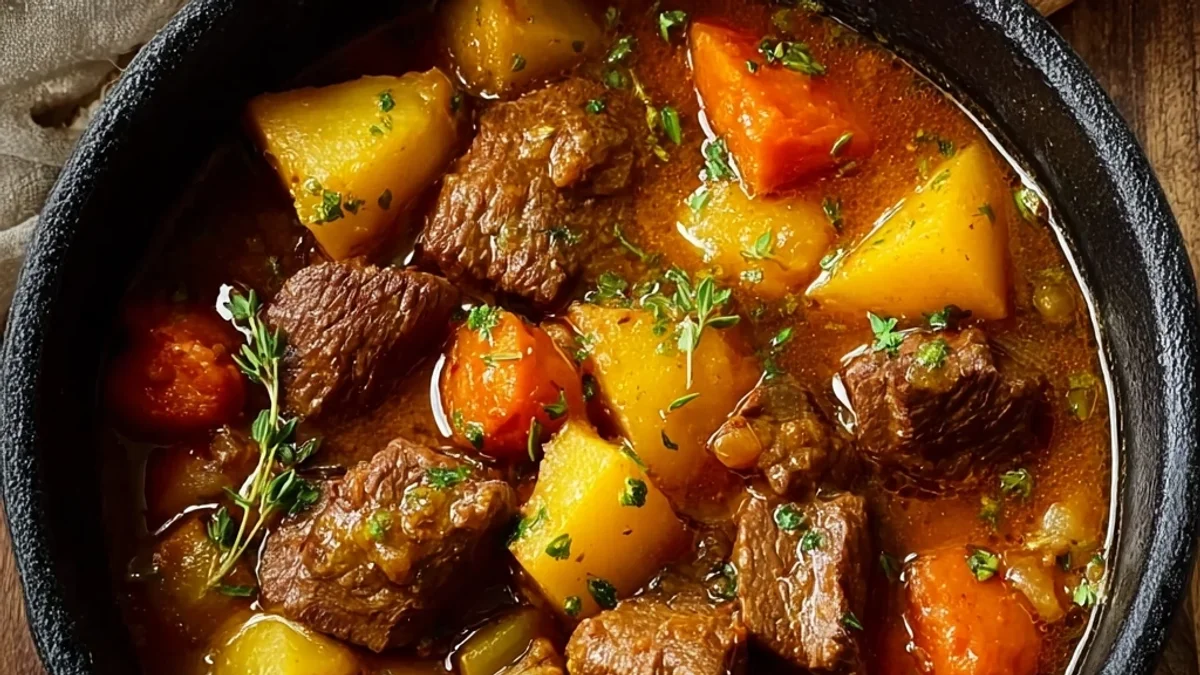


There are some smells that just pull you right back to a specific moment, aren't there? For me, the rich, savory aroma of a Classic Homemade Beef Stew simmering on the stove transports me straight to my grandma’s kitchen on a chilly autumn day. I remember being a little sprout, watching her stir this magical pot, steam fogging up the windows. I didn't expect that a simple meal could hold so much warmth and memory. This isn't just a recipe, it's a hug in a bowl, a tradition I’ve carried into my own slightly chaotic kitchen. Honestly, it’s the ultimate comfort when you need it most.
I remember one time, early in my cooking journey, I tried to rush the browning of the beef. I crammed all the cubes into the pot at once, thinking I was saving time. Big mistake! They just steamed instead of searing, and the stew turned out... well, let's just say it lacked that deep, rich flavor. My husband still teases me about the "grey stew incident." Live and learn, right? Now, I always do it in batches, and the results for this Classic Homemade Beef Stew are always worth the extra few minutes.
Ingredients for Classic Homemade Beef Stew
Main Ingredients
- Beef chuck roast: You want a good, fatty cut for stew, something that breaks down beautifully. Don't skimp here, lean cuts just don't give you that melt-in-your-mouth texture. I once tried a sirloin, thinking "healthier," and it was so tough, honestly, a real kitchen disaster. Stick to chuck!
- Russet potatoes: These are my go-to for stew because they absorb all that delicious broth and get wonderfully tender. I peel them, but if you like a rustic feel, leave the skins on! Just make sure they're scrubbed clean.
- Carrots: Sweetness and color, a must! I like chunky pieces, not too small, so they don't disappear into the stew. Fresh is always best, you can really taste the difference.
- Celery: Adds an aromatic base, don't skip it! It builds a great foundation with the onions and carrots.
- Yellow onion: The unsung hero! It creates so much flavor as it slowly caramelizes. I usually chop it finely, but sometimes I get lazy and just do a rough dice, and it still works, kinda.
- Beef broth: Use a good quality one, hon. It makes all the difference. I've tried those cheap, watery ones, and the stew just tasted... flat. Spend a little extra, you won't regret it.
Flavor Boosters
- Tomato paste: This deepens the flavor and adds a touch of acidity that balances everything out. A little goes a long way. I always keep a tube in the fridge, so convenient!
- Garlic: Because, garlic! I use at least 4-5 cloves, sometimes more. Freshly minced is non-negotiable for me, don't even think about the jarred stuff, it just tastes different.
- Red wine (optional): A splash of dry red wine really elevates the richness. I use whatever I'm drinking, usually a Cabernet Sauvignon. If you don't want to use wine, just add more beef broth.
- Worcestershire sauce: A secret weapon for umami! It adds a depth that you can't quite pinpoint but makes the stew so much more savory.
Seasonings & Fats
- Olive oil: For browning the beef. You need enough to coat the bottom of your pot.
- All-purpose flour: To dredge the beef and thicken the stew slightly. I've tried cornstarch, and it works, but flour gives it a more traditional, velvety texture.
- Dried thyme: Essential for that classic stew flavor. I've tried fresh, and it's lovely, but dried really holds up well to the long cooking time.
- Bay leaves: Another classic aromatic. Don't forget to take them out before serving, I've had guests find them before, oops!
- Salt & Black pepper: Season generously at each stage. I always taste as I go, it's the only way to get it just right.
Finishing Touches
- Fresh parsley: For a pop of color and fresh flavor at the end. It really brightens up the dish.
Instructions for Classic Homemade Beef Stew
- Prep the Beef:
- First things first, get that beef ready! I always pat my beef chuck roast cubes super dry with paper towels. Honestly, this step is crucial for getting a good sear, and I used to skip it, resulting in sad, grey beef. Dredge the dry beef in flour, shaking off any excess. You want a light coating, not a thick paste. This helps develop a beautiful crust and thickens the stew later, making for an amazing Classic Homemade Beef Stew.
- Sear the Beef:
- Heat a glug of olive oil in a large Dutch oven or heavy-bottomed pot over medium-high heat. When it's shimmering, add the beef in batches. Don't overcrowd the pot, hon, or it won't brown properly another mistake I've made countless times! Sear until deeply browned on all sides, about 3-4 minutes per batch. Remove the browned beef and set it aside, leaving all those delicious browned bits (fond) in the pot. This browning is key to a rich Classic Homemade Beef Stew.
- Classic Homemade Beef Stew: Sautéing Aromatics:
- Reduce the heat to medium. Toss in your chopped yellow onion, carrots, and celery. I love how the kitchen starts to smell amazing right about now sweet and savory! Sauté for about 5-7 minutes, scraping up those browned bits from the bottom of the pot with your spoon. Add the minced garlic and tomato paste, stirring for another minute until fragrant. Oh, that garlic smell, it's just the best, isn't it? This step builds the flavor base for our Classic Homemade Beef Stew.
- Deglaze and Simmer:
- Pour in the red wine, if you're using it, and let it simmer for a couple of minutes, scraping up any remaining bits. If no wine, just go straight for the beef broth. Stir in the beef broth, Worcestershire sauce, dried thyme, and bay leaves. Bring the liquid to a gentle simmer, then return the seared beef to the pot, nestling it down into the liquid and vegetables. Season generously with salt and black pepper.
- Classic Homemade Beef Stew: Slow Cooking Perfection:
- Once the beef is tucked in, add your chunky russet potatoes to the pot. They'll cook down beautifully with everything else. Bring the stew back to a gentle simmer, then reduce the heat to low, cover the pot, and let it cook for at least 2.5 to 3 hours. I usually peek in after an hour or so, just to make sure it's gently bubbling, and give it a stir. The aroma filling my kitchen is honestly half the joy of making this Classic Homemade Beef Stew!
- Classic Homemade Beef Stew: Serving It Up:
- After all that simmering, your beef should be fork-tender and the sauce rich and thick. Remove the bay leaves seriously, don't forget this! Taste and adjust seasonings as needed. Sometimes I add a tiny splash more salt or pepper right at the end. Let the stew rest for about 10-15 minutes off the heat, covered, before serving. This lets the flavors meld even more. Garnish with fresh parsley, and you're all set for a truly comforting Classic Homemade Beef Stew.
There's something so satisfying about the quiet hum of the stew pot, knowing that magic is happening inside. My kitchen might be a bit of a mess with flour dust and vegetable scraps, but that rich, earthy smell makes it all worth it. It’s those moments, those simple kitchen joys, that make cooking this Classic Homemade Beef Stew so special. It’s not about perfection, it’s about the warmth and nourishment it brings.
Storage for Classic Homemade Beef Stew
This Classic Homemade Beef Stew is honestly one of those dishes that tastes even better the next day, if you can believe it! I usually make a bigger batch just for the leftovers. Once it's completely cooled, transfer it to airtight containers. It’ll happily hang out in the fridge for 3-4 days. I microwaved it once and the sauce separated a little so don't do that lol. Gently reheat it on the stovetop over low heat, adding a splash of extra beef broth if it's thickened up too much. It also freezes beautifully for up to 3 months. Just thaw overnight in the fridge and reheat. A real meal-prep win!

Ingredient Substitutions for Classic Homemade Beef Stew
I’ve experimented quite a bit with this Classic Homemade Beef Stew over the years, sometimes out of necessity, sometimes just for fun! If you don't have russet potatoes, Yukon Golds work wonderfully, or even sweet potatoes for a slightly different flavor profile I tried that once and it worked... kinda, a bit sweeter than I expected. No red wine? A splash of balsamic vinegar or even a dark beer can add a similar depth of flavor. For the beef, if chuck roast is hard to find, stew beef (pre-cut) works, but make sure it’s a cut meant for slow cooking. Fresh herbs like rosemary or sage can be swapped for dried thyme, just use a bit more.
Serving Your Classic Homemade Beef Stew
Oh, the serving! This Classic Homemade Beef Stew is a meal in itself, but it truly shines with a few simple additions. My absolute favorite pairing is a big, crusty baguette for soaking up every last drop of that rich, savory sauce honestly, it’s non-negotiable in my house. A simple green salad with a light vinaigrette cuts through the richness beautifully. And for drinks? A robust red wine (maybe the one you cooked with!) or even a dark ale pairs wonderfully. A warm, comforting Classic Homemade Beef Stew and a rom-com on a chilly evening? Yes please, that's my kind of night!
Cultural Backstory of Beef Stew
Beef stew, in its many forms, is a dish with roots in so many cultures, and it’s always been about making the most of what you have. From French daubes to Irish stews, it’s a testament to slow cooking tough cuts of meat until they're melt-in-your-mouth tender, combined with humble root vegetables. For me, this particular Classic Homemade Beef Stew recipe feels deeply American, reminiscent of my grandmother's hearty cooking, a dish born from practicality and a desire for warmth and sustenance. It’s a dish that transcends specific origins, becoming a universal symbol of comfort and home, a feeling I try to recreate every time I make it.
There's really nothing quite like dishing up a big bowl of this Classic Homemade Beef Stew. The steam rising, the rich colors, the tender beef just falling apart it’s pure magic. Every spoonful is like a little taste of home, a reminder of all those cherished memories. I honestly hope this recipe brings as much warmth and joy to your table as it does to mine. Don't forget to share your own kitchen adventures with this stew, I'd love to hear them!

Frequently Asked Questions About Classic Homemade Beef Stew
- → What kind of beef works best for Classic Homemade Beef Stew?
I always recommend beef chuck roast. It has just the right amount of fat and connective tissue to break down into incredibly tender, flavorful bites during the long simmering process. I tried a leaner cut once, and it was a bit chewy, honestly, not ideal for this recipe.
- → Can I make this Classic Homemade Beef Stew without wine?
Absolutely! If you prefer not to use wine, simply replace it with an equal amount of beef broth. You could also add a splash of balsamic vinegar for a touch of acidity and depth, which I've done before, and it works pretty well, kinda.
- → How do I prevent my vegetables from getting mushy in the stew?
I cut my carrots and potatoes into larger, chunkier pieces, about 1-inch size. This way, they hold their shape better during the long cook time. Also, adding them a bit later, as specified in the instructions, helps them stay tender-crisp rather than turning to mush, which I definitely learned the hard way!
- → How long does Classic Homemade Beef Stew last in the fridge?
This stew is fantastic for leftovers! Once cooled, store it in an airtight container in the refrigerator for up to 3-4 days. I actually think the flavors deepen overnight, making it even more delicious. Just gently reheat on the stove.
- → Can I add other vegetables to this Classic Homemade Beef Stew?
Of course! I’ve added parsnips, turnips, or even frozen peas (stirred in at the very end) before. Just be mindful of cooking times for different veggies. Parsnips can go in with the potatoes, but peas only need a minute or two to warm through.